

Iran's leather and footwear industry needs cooperation, innovation, and supportive policies
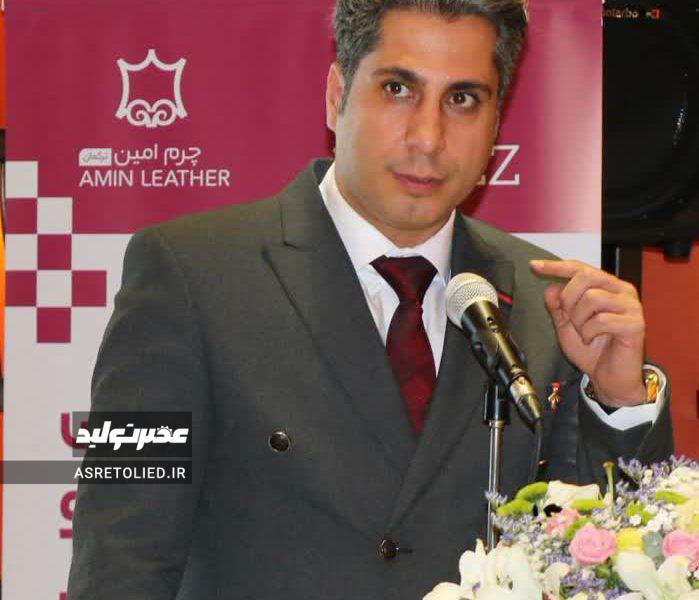
Hamed Lary, CEO of Amin Leather Industrial Group, in an interview with Asr Tolid reporter, explained the status of the leather and footwear industry, the challenges and opportunities in this field.
He said: "With their efforts and perseverance, industrialists in this field have kept the light of one of Iran's oldest industries burning and play an important role in the country's economy and employment."
This manufacturing activist added: "The discovery of the world's oldest shoe in Armenia (which was part of Iran's borders) dating back 5,500 years, as well as the discovery of a shoe in the Cheherabad mine dating back 2,500 years, indicates the antiquity of this industry in Iran. At some times, our production was ahead of many European countries, but at some points we lost our position due to adopting incorrect strategies."
He added, regarding the main challenges of this industry: "The most important problems include the lack of a systematic and managerial approach in factories and production workshops, the lack of knowledge and technology sharing between manufacturers, low productivity, the lack of skilled labor, the lack of relevant academic disciplines, the concentration of production on small units and their deprivation of up-to-date technologies, a liquidity deficit, a sharp increase in the risk of collecting receivables, a lack of investment, the difficulty of adapting the tax structure for small workshops, the lack of accurate and official statistics and information, shoe and leather smuggling, the sale of raw wet blue to other countries, the lack of sufficient support from relevant organizations, the lack of cohesion between institutions and associations, problems with foreign exchange allocation, and energy imbalances."
This production activist emphasized: One of the important issues is the low awareness of consumers about the difference between shoes made of natural and artificial leather. Artificial leather can lead to fungal infections due to its lack of breathability. It contains irritating and allergenic substances and can cause skin dermatitis. Also, the use of plasticizers and toxic compounds in their manufacture, especially phthalates and dioxins, is a threat to human health in the long term. Therefore, according to reliable scientific studies and research, in order to maintain health, it is strongly recommended not to use shoes with artificial leather uppers and to use natural leather shoes in accordance with the thousands of years of experience of humanity.
Lary added: "Many suggestions can be made to support this industry." In order to improve cash flow, better collect receivables, and control production levels, it is suggested that temporary tax exemptions be considered for small shoe manufacturing workshops to provide them with the opportunity to identify, organize, and synchronize with official laws while realizing the aforementioned issues.
This production activist concluded by saying: National Leather and Footwear Industry Day is a good opportunity to increase cooperation and collaboration between private and government institutions and manufacturers, identify the root causes of obstacles and problems, and create supportive decisions and policies to improve quality, increase production, increase productivity, increase exports, and create jobs for this industry in the country.